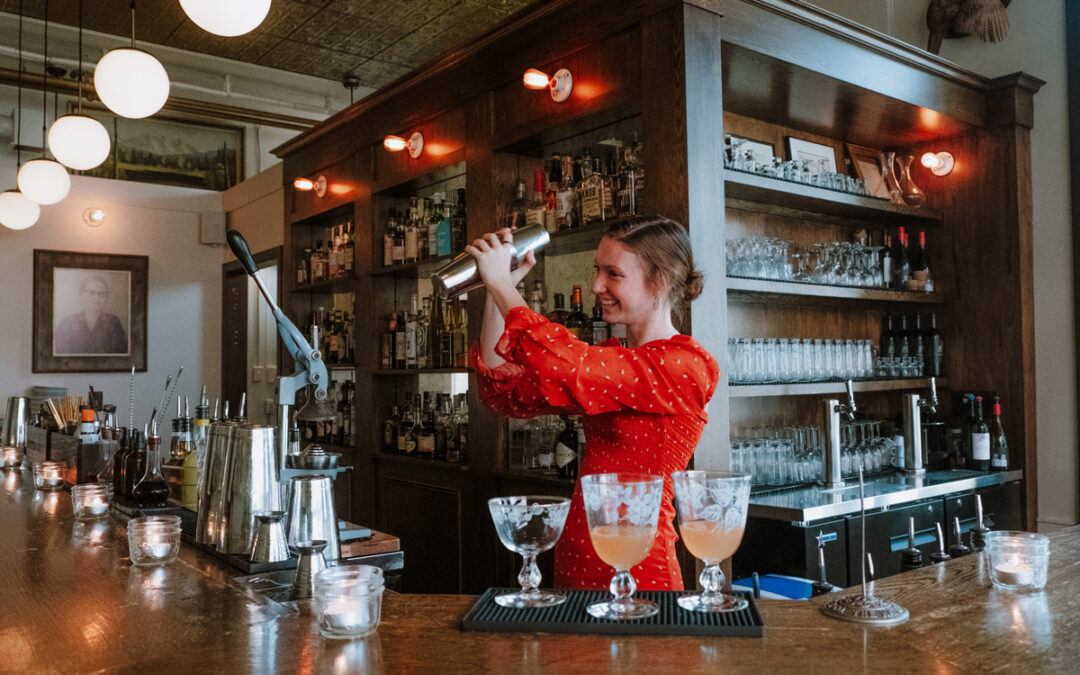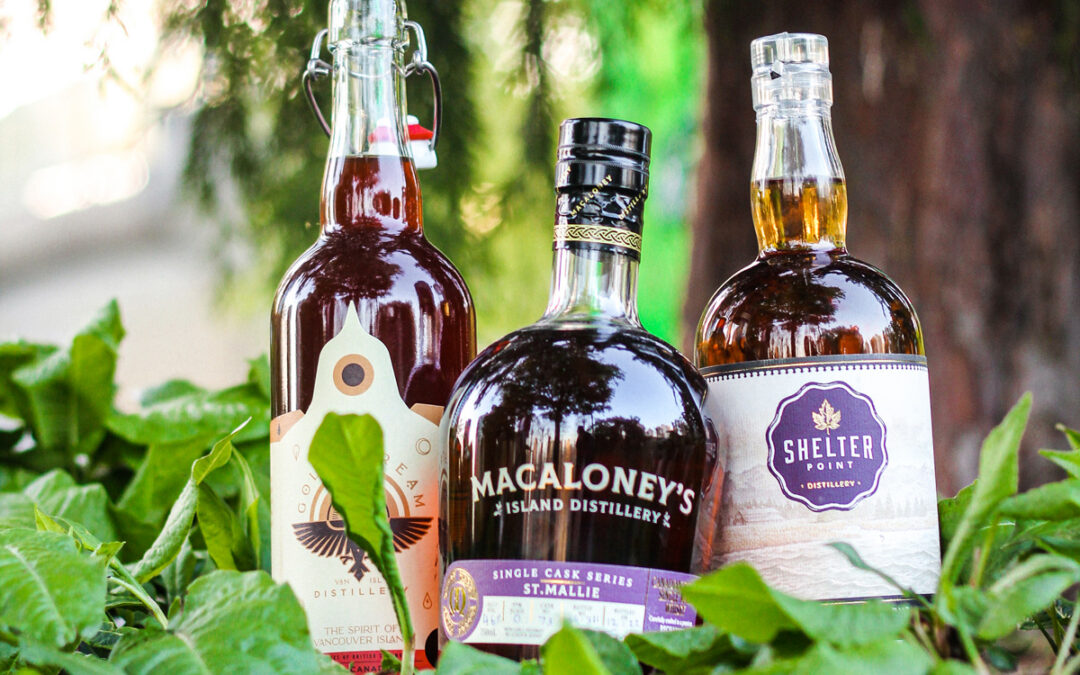
Andrew Kong’s version of the Blonde Negroni. H Tasting Lounge photo
There are numerous recipes for a white or blonde Negroni, but this is the variation preferred by Andrew Kong, bartender at H Tasting Lounge. What makes it stand out is the perfectly clear king ice cube.
• 1.25 oz Long Table Distillery Dry Gin
• 1 oz Luxardo Bianco Bitters
• 1 oz Lillet Blanc or Cocchi Americano
“The drink is intended to be a Canadian highball, that is, a drink that is spirit forward, but is also balanced and refreshing,” says Jeff Savage, Botanist’s head bartender, who created the cocktail. The large, crystal-clear ice cubes are precisely measured to fit the glassware and are cut with a band saw. They are also adorned with the Botanist logo: The custom metal stamp is placed on top of the cube and gravity does the rest.
• 1.5 oz Canadian Club Rye Whisky
• 0.5 oz gin, preferably St. George Terroir Gin
• 1.5 oz birch water
• 1 oz Smoked Tea Syrup (recipe follows)
Tiki is back in Vancouver. Why did it ever go away?
Istockphoto.com photo
Tiki culture is a liquid ticket to an imaginary tropical island where the breeze is always warm, the music sways like the branches of a palm tree, and the rum flows as easily as the waves that wash up on a sandy beach.
Tiki originated in California in 1933, but exploded in popularity after the Second World War. It was inspired by the romance of the South Pacific, the culture of Polynesia, the flavours of Asia and the rum punches of the Caribbean, making it the ultimate fusion cocktail experience, served in a kitschy-cool Hollywood-ready vessel to a market that was weary of war and ready to party.
Beware of the Scorpion’s lethal sting. Joanne Sasvari photo
Originally a blender drink from Beachbum Berry, and traditionally served as a bowl for six with a gardenia garnish at Trader Vic’s, the Scorpion makes a terrific single-serving shaken drink, too. Just beware of its lethal sting.
• 2 oz light rum
• 1 oz brandy
• 1.5 oz orange juice
• 0.5 oz lemon juice
• 0.75 oz orgeat
Three Dots and a Dash—victory! Joanne Sasvari photo
The garnish says it all. The three cherries are the dots, the pineapple wedge the dash, representing the letter “V” in Morse code, which was the symbol for “victory” during the Second World War.
• 1.5 oz rhum agricole or demerara rum
• 0.5 oz aged blended rum
• 0.5 oz orange juice
• 0.5 oz lime juice
• 0.5 oz honey syrup (see note)
• 0.25 oz falernum
• 0.25 oz pimento dram (see recipe)
• 1 dash angostura bitters
• Garnish: 3 cherries and 1 wedge of fresh pineapple
Pimento Dram makes a great addition to tiki and other cocktails. Joanne Sasvari cocktail
This is a simple spice-flavoured liqueur that makes a great addition to tiki and other cocktails. Note that it will take about a week to infuse, so plan accordingly.
• 2 Tbsp whole allspice berries
• 0.5 cup light or dark rum (whichever you prefer)
• 1 cinnamon stick
• 0.5 cup water
• 0.5 cup brown sugar
From East and West, bartenders move on to the regional finals of the Diageo World Class competition
Chris Enns, bartender at Vancouver’s Fairmont Pacific Rim Hotel, is the World Class Canada Bartender of the Year 2018. Photo courtesy of Diageo World Class Canada
Since the beginning of January, Canada’s bartenders have been perfecting their recipes, practising their techniques and preparing for their moment in the spotlight at the Diageo World Class Canada cocktail competition.
On March 1, 13 bartenders from Eastern Canada and 13 from the West made it through to the Regional Finals, which will be held in Toronto and Calgary in late March. From there, five winners from East and West will go on to the National Final in June. The winner of that event will compete in the global final of the world’s biggest, most prestigious bartending competition, which will be held in Glasgow at the end of September.
Bartender Justin Taylor pours a Sazerac at The Cascade Room. Dan Toulgoet photo
What is it with absinthe? Every time the herbal spirit gets involved, confusion and controversy seem to follow.
Take the Sazerac, one of the world’s oldest and greatest cocktails and since 2008 the official state cocktail of Louisiana. For decades experts as revered as Dale de Groff, King Cocktail himself, traced the origins of the first cocktail to this anise-scented variation on the Old Fashioned. Sadly, it can’t be true, since the word “cocktail” first appeared in print in 1806 and the apothecary who allegedly invented the Sazerac was only three years old at the time.
A great classic that belongs in every barkeep’s repertoire.
• 1 tsp (approximately) absinthe or pastis • 1 cube sugar or 1 tsp simple syrup • 3 or 4 dashes Peychaud’s bitters • 2 oz Cognac, rye whisky, or a mix of both • Lemon peel for garnish