Narrative-driven cocktail menus don’t just list drinks, they tell a story of place
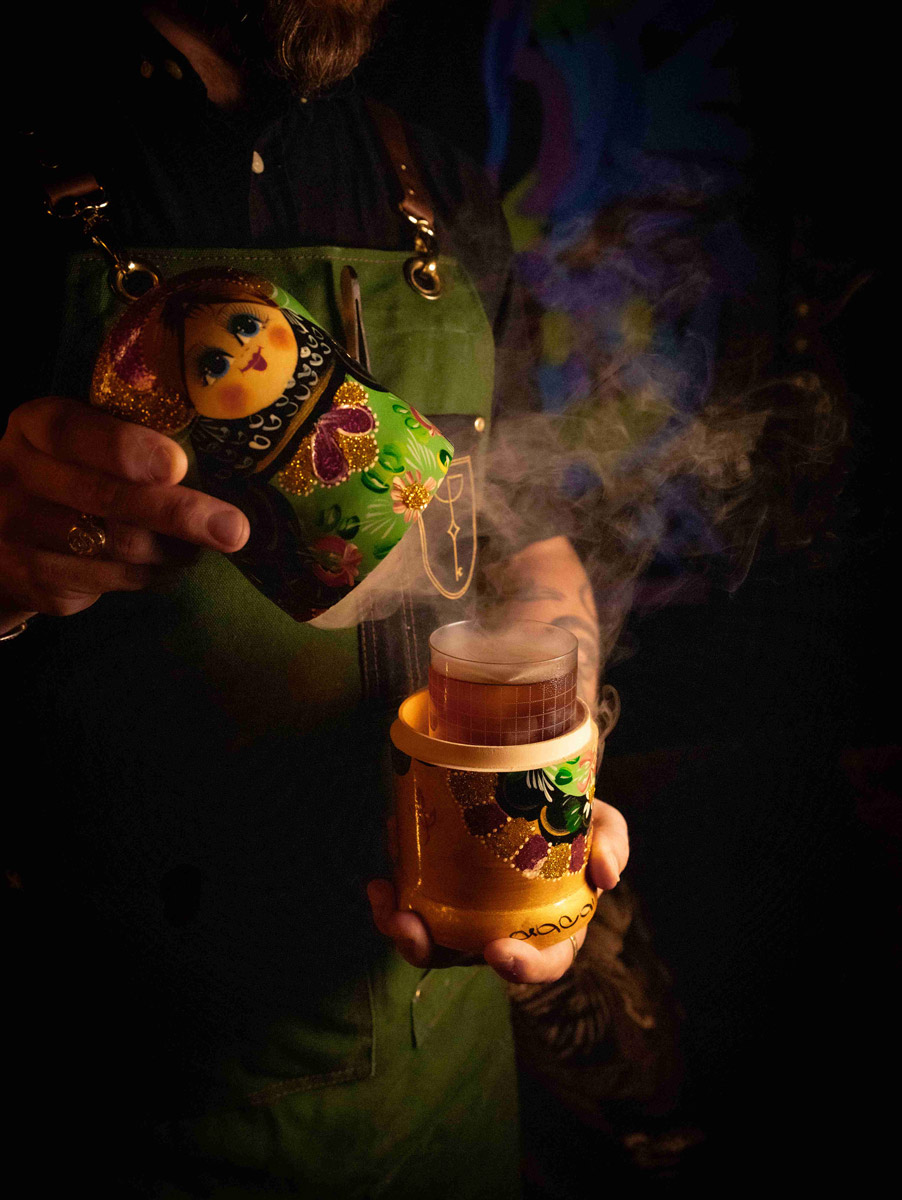
This summer at Cry Baby Gallery, a cocktail bar hidden behind a small art gallery in Toronto’s Little Portugal, the menu took a new direction—from minimalism to maximalism.
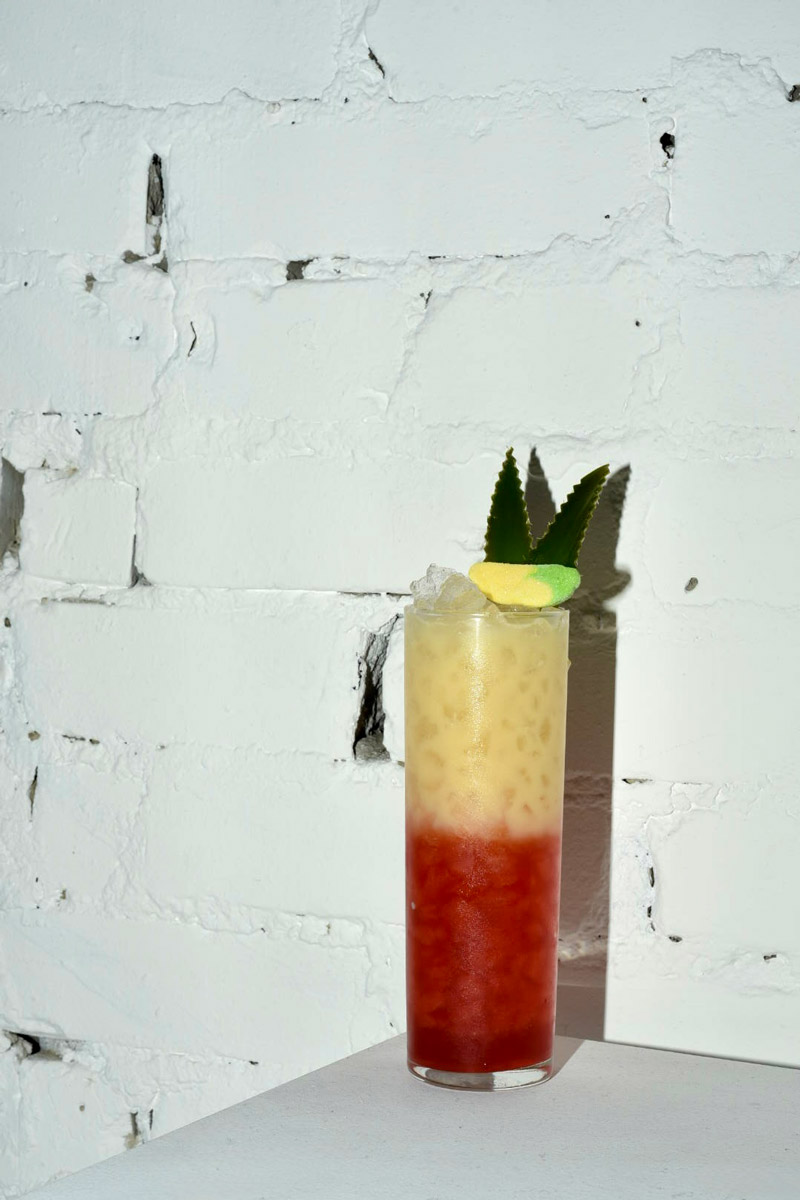
Once a sparse and straightforward list with a dozen cocktails, the menu at Cry Baby is now a 22-page nostalgia trip rooted in analog-era Toronto. It borrows its format from the Yellow Pages, an artifact that is described on the menu as sort of a pre-digital influencer. Each drink is tied to a fictional business of days gone by—psychics, martial arts studios, modelling agencies and others—to build out an imagined community and history.

The transition towards this storytelling menu, according to owner Rob Granicolo, actually began six months earlier, when Cry Baby launched The Art Auction, a menu illustrated with images of works of art from the gallery side of the operation.
“Everything changed when we turned five and, for whatever reason, decided our next menu had to be a statement piece,” he says, noting that the next step was telling a story about their hood. “We knew we had to one-up The Art Auction with the summer menu, so we decided to create a Yellow Pages menu, because it’s both hilarious and visually striking.”
It’s also likely a sign of things to come, given that so many notable bars have turned away from skimpy lists and opted for narrative-driven menus.
About connection
Vancouver’s Prophecy Bar boasts an ambitious and lovingly illustrated menu divided into seven chapters devoted to telling stories like “Our Shared History” and the “Legends Among Us.” The menu at the Fairmont Royal York’s Library Bar is a leather-bound love letter to CanLit and, at Victoria’s Humboldt Bar, the concept driving the plot revolves around German philosopher, geographer and naturalist Alexander von Humboldt (1769-1859).
The arguably obscure choice for a menu’s central character might sound random at first, but, once you learn the bar’s address—722 Humboldt Street—everything starts to make a lot more sense.
“I realized the street was named after Alexander von Humboldt and I very quickly realized that this is an incredible person from history who has touched so many parts of our lives,” says bar manager Brant Porter. “From a storytelling point of view, it was the perfect fold.”
A renaissance man if there ever was one, Humboldt was an explorer, geologist, botanist and abolitionist, as well as one of the first scientists to draw attention to the negative impact humanity had on nature. His work is considered a keystone in modern climate science.
“It’s really about connection,” Porter says. “Humboldt’s great gift to the world was showcasing that all of nature, including humans, was interconnected. And that’s what bars are for, too. So, it all fell into place pretty easily.”
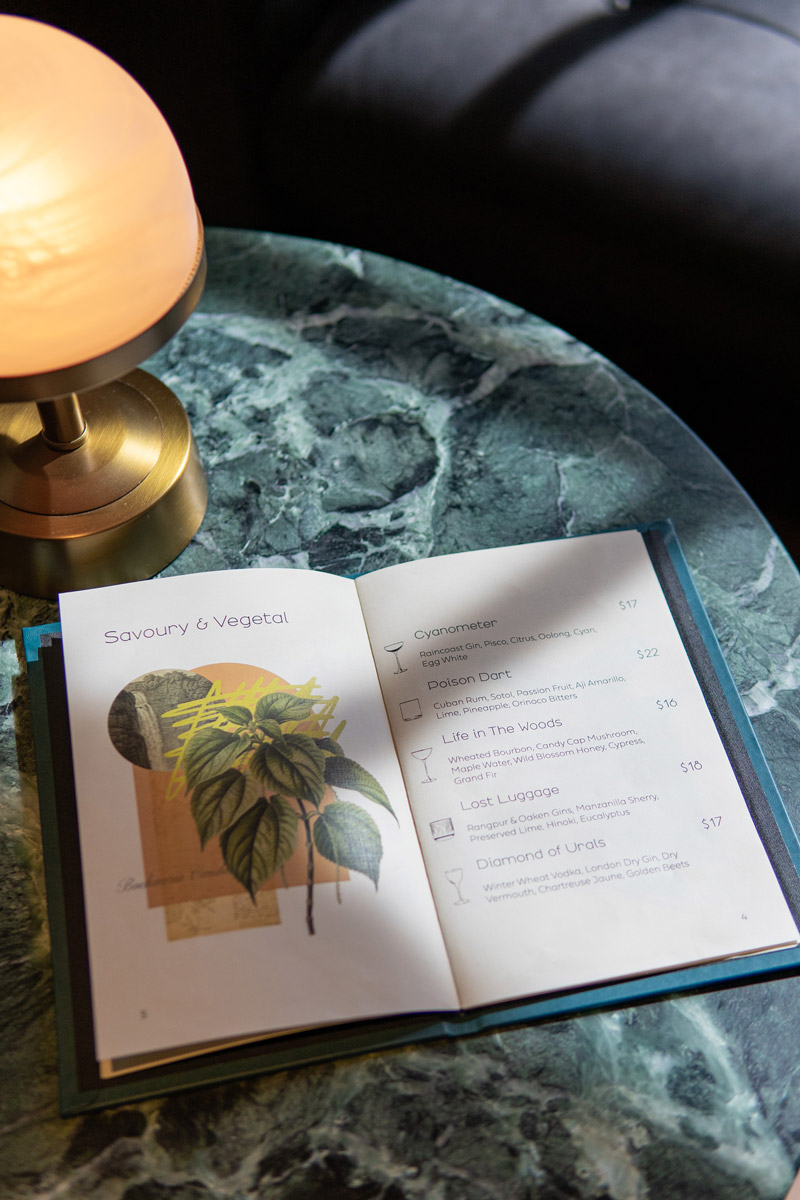
The concept might have been a cinch, but tailoring the cocktail program to “reflect Humboldt’s vision of the natural world” involved some heavy lifting. Each of the 15 signature cocktails has a direct line to Humboldt and, to make that happen, Porter had to delve into his biography, as well as a healthy dose of German scientific and cultural history.
One saving grace, he says, was that having a very specific theme for each cocktail can actually make recipe creation easier because it often eliminates the “paradox of choice.” For example, when he decided to make a drink named after the cyanometer Humboldt used to measure the blueness of the sky, he knew the drink had to be blue.
“It forces you to be creative and, at the same time, it kind of boxes you in,” Porter explains. “And the best part, the most fun part, is that these drinks are very much more than the sum of the parts.”
Building a story
Indeed, these menus tell a story and, often as not, become conversation pieces in and of themselves.
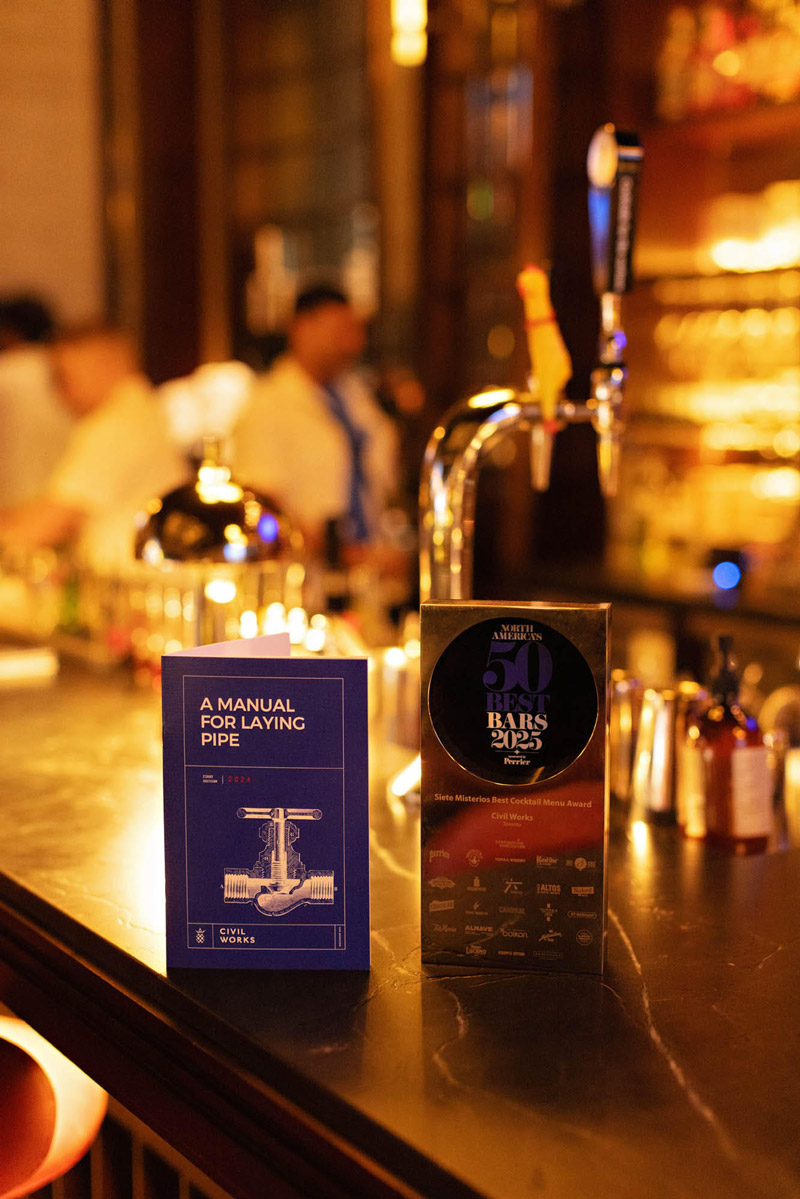
“It’s a big ice breaker for sure,” Élise Hanson says of the narrative-driven menu. She’s bar manager at Toronto’s Civil Works and co-creator of the bar’s award-winning menu, A Manual for Laying Pipe.
Hanson adds: “But it can also be a lot to digest, so, on the first page of the menu we open with bold red box that says there’s a quick reference page at the back of the book for folks who might be ‘on a date and too nervous to read this to read a bunch.’”
Or, for that matter, just want a cheat sheet, given that not everyone wants to feel like they’re studying for a test before they put in their drink order. Bar and history nerds aside, a lot of people just want a smart cocktail.
These menus do more than simply entertain guests and list the drinks, though. Almost all the narrative-driven menus in this current wave also help to build a sense of place for the bars. Laowai, for example, opened with an illustrated tribute to Vancouver’s Chinatown in 2021, making it a leader in this menu movement. The literary-themed menu at the Library Bar is a nod to the fact that the physical space the bar occupies was once the hotel’s library for guests. Cry Baby’s menu flicks at the grittier side of an imagined west end.
At Civil Works, the Manual is an exploration of the Waterworks building (in which it’s located) and its architect, JJ Woolnough. This summer, its patio extension, Civil Parks, celebrated St. Andrew’s Playground Park, an adjacent green space that was Toronto’s first purpose-built playground, with a new menu based in the history as well as nostalgia for the carefree summers of our youth.
And what’s next for the team at Civil Works? A menu that honours the Garment District, the area bordered by Spadina, Bathurst, King and Queen that was once the centre of textile and fabric manufacturing in the city and now is home to the Waterworks Food Hall.
“You can’t really control the space so, instead of trying to fight against it, you have to just embrace it and build your story from that,” says Hanson. “I think it’s really important to honour the space you’re in.”
And she thinks it’s a key to their bar’s success as well.
“Toronto’s got so much talent, so many places and so many bartenders that make amazing drinks these days,” Hanson says. “So I think, at this point, it’s about doing something unexpected for the guests and then seeing the guest reaction. That’s why we’re doing this. That’s what makes it fun and worth it.”